Crowded Game Release Windows in 2026: What the Autumn Launch Rush Means for Indie Studios
Autumn is always a busy season for video games, but 2026 stands out. Publishers are packing big releases into September and October, and the crowded calendar is changing how studios think about launch timing. For indie developers and anyone planning a game, it’s a useful lesson in why when you release matters almost as much as what you release.
What’s happening in the 2026 release calendar?
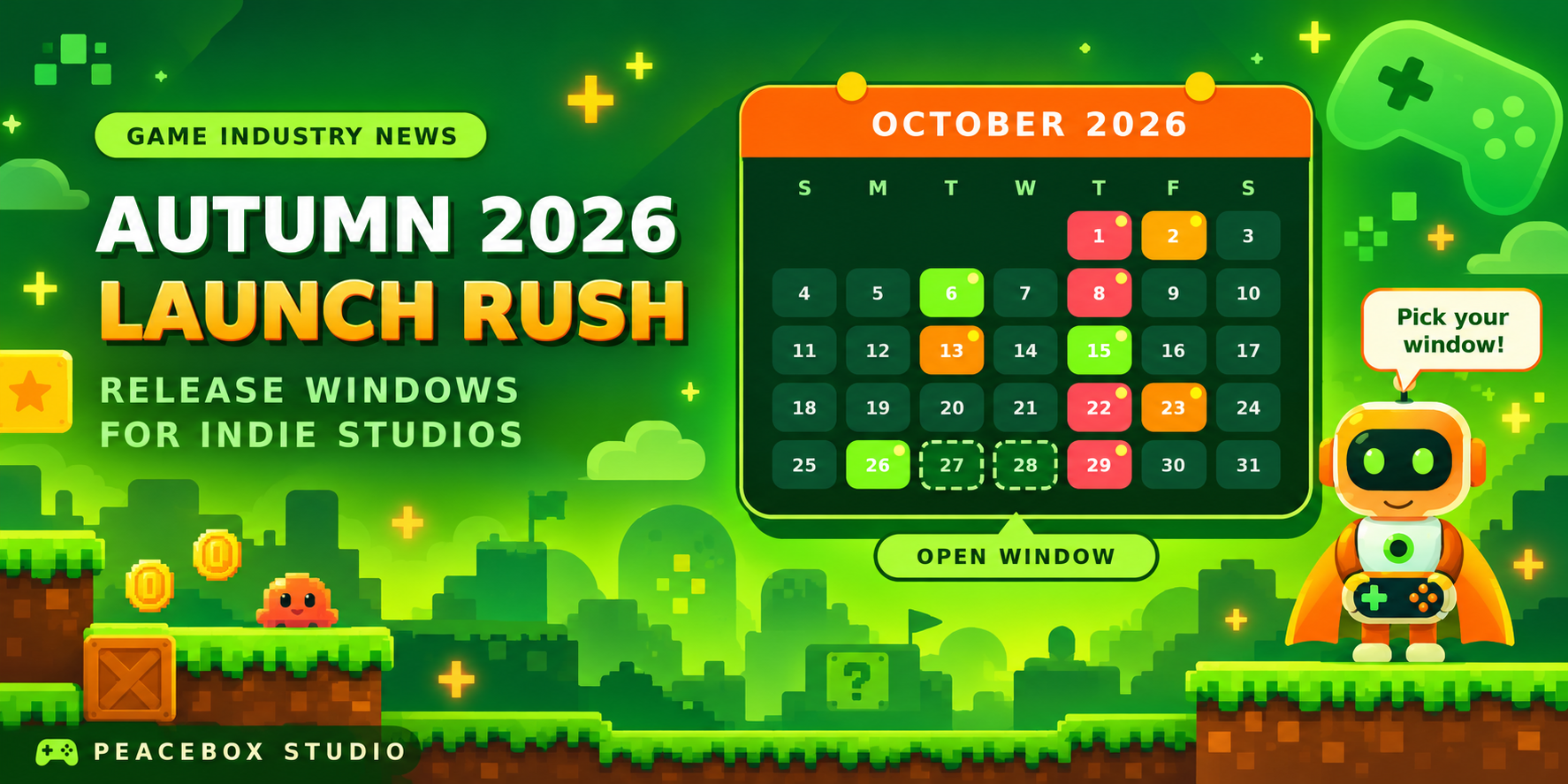
Polygon reported that October 2026 has too many games trying to release at the same time as GTA 6. Studios are competing for the same attention, and many are trying to find windows that avoid the biggest launches.
The October schedule shows the pressure. Console releases this month include Gears of War: E-Day, Castlevania: Belmont’s Curse, Final Fantasy Resonance, Call of Duty: Modern Warfare 4, and Phantom Blade Zero. Each of these draws press coverage, streamer attention, and player budgets in the same few weeks.
Why do release windows matter more than ever?
Players have limited time and limited money. When several major games launch close together, smaller titles face three problems:
- Less visibility. Storefront space, social feeds, and gaming media fill up with the biggest names.
- Split attention from creators. Streamers and reviewers prioritize the games their audiences are searching for.
- Weaker launch-week momentum. The first days after release often decide how a game is ranked and recommended, so a quiet launch can limit long-term growth.
A good game released in the wrong week can get lost. A good game released into a calmer window has room to be noticed.
What this means for indie studios?
Indie teams can’t outspend large publishers, but they can out-plan them. The studios that handle crowded seasons well usually do three things:
1. Avoid direct competition with blockbusters. If a major release lands in your genre, consider moving your date by a few weeks. Even a small shift can change how many players see your launch.
2. Counter-program with a clear niche. If you can’t avoid a busy window, make your game easy to tell apart. A distinct art style, a focused genre, or a short, polished experience can stand out beside large open-world releases.
3. Build your audience before launch day. Wishlists, a demo, a trailer, and a community give you a ready audience when your game goes live. Teams that wait until release to start marketing are the most exposed in a crowded season.
A simple checklist for choosing a release window
Before you lock a date, ask yourself:
- Which major titles are launching within two weeks of my date?
- Do those titles target the same players or the same genre as mine?
- Is my build stable enough that a delay would cost me less than a rushed launch?
- Do I have enough wishlists, press contacts, and community members to support launch week?
- Is there a quieter period, such as early in the year or the summer, where my game would get more attention?
If the answers point to a crowded window, moving the date is often the cheapest marketing decision you can make.
Planning matters from day one.
Release timing connects directly to production planning. A schedule that slips a few months can push a game from a quiet window into a crowded one, which is why scope, testing, and pipelines need to be managed from the start. We cover this in more detail in our guide to the 5 Common Mistakes in Game Development, including why teams that treat launch as the finish line often struggle after release.
The takeaway
The 2026 autumn rush shows that a great game isn’t enough on its own. Timing, planning, and audience-building decide how many players ever see it. Studios that treat the release date as a strategic decision, not just a deadline, give their games a much better chance.
Planning a game launch and want help with scope, schedule, and release strategy? Talk to the Peacebox Studio team and let’s plan it properly.