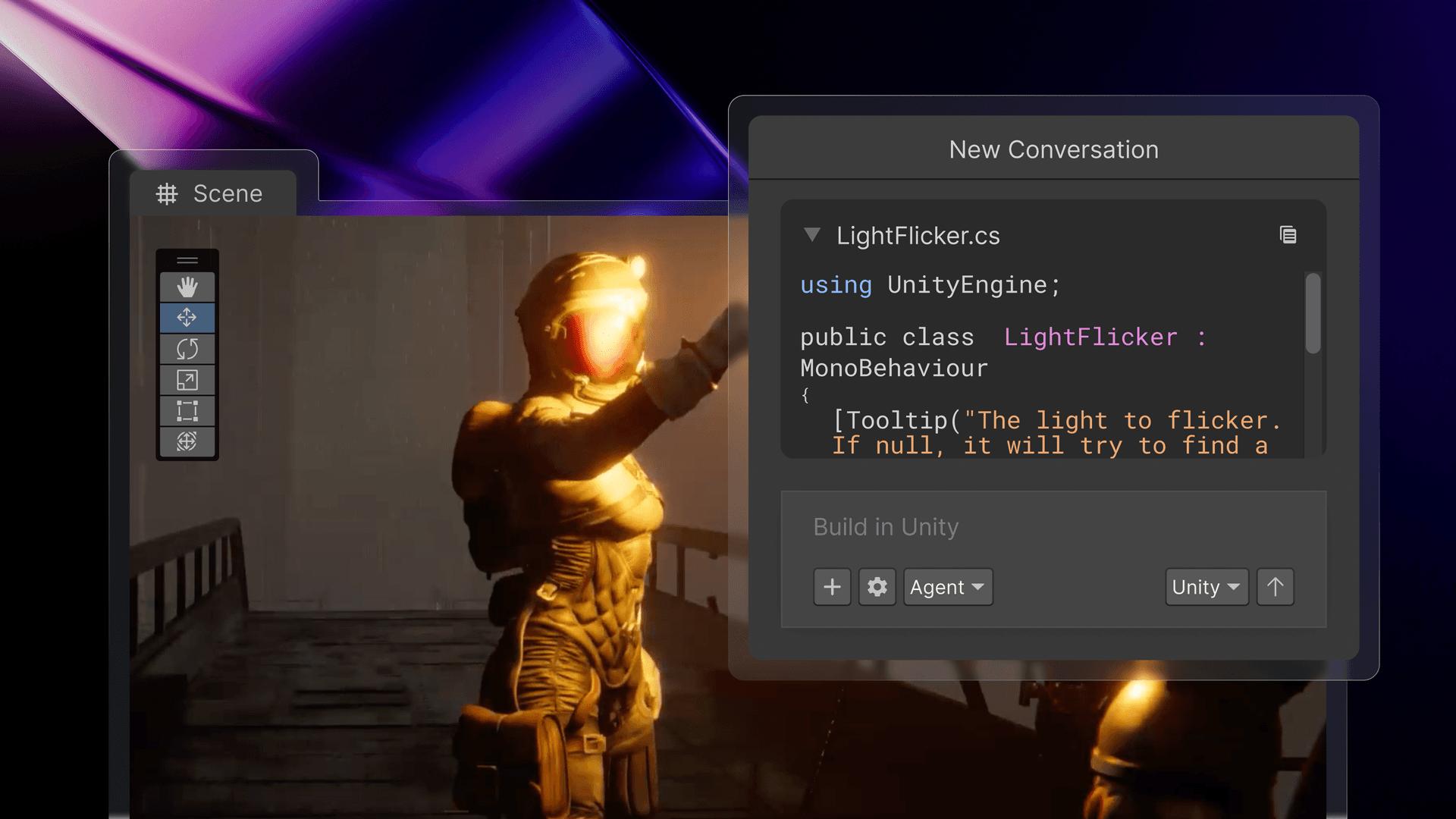
Google and Unity Announce AI-Powered Gaming Platform: A New Era of Game Development
The gaming industry is entering an exciting new phase as Google and Unity join forces to introduce an AI-powered game creation platform designed to make building, playing, and sharing games more accessible than ever.
Announced on October 7, 2026, this strategic partnership combines Google's artificial intelligence capabilities with Unity's established game development technology. The initiative introduces Google Playground, an experimental platform that lets users create playable games using natural language, alongside Unity Spark, an upcoming creation experience designed to support more advanced and professional-quality game development.
For developers, independent studios, content creators, and gaming enthusiasts, the announcement signals an important shift in how interactive entertainment could be created and distributed.
At Peacebox Studio, we explore what this partnership means for the future of game development, how the new technology works, and why AI-powered creation tools could open exciting opportunities across the gaming industry.
Google and Unity Join Forces to Transform Game Creation
Google and Unity officially announced their partnership on October 7, 2026, outlining their vision for a new generation of AI-assisted gaming experiences.
The collaboration brings together two major areas of expertise:
Google's AI technology: Artificial intelligence capabilities designed to interpret user instructions and support content creation.
Unity's game development technology: A widely adopted real-time development ecosystem used to create interactive games and applications.
The central idea is to make game development more accessible to people who have creative ideas but lack traditional programming or game design experience.
Instead of requiring every beginner to start with complex development tools, the companies are introducing workflows where creators can describe their concepts through natural language.
Imagine typing:
"Create a colorful 3D racing game with cartoon characters, exciting tracks, obstacles, and multiplayer challenges."
AI-assisted tools could help translate that concept into an initial interactive experience.
The partnership aims to support a development journey that begins with simple game ideas and grows toward more sophisticated projects.
Introducing Google Playground: Create Games Without Coding
One of the biggest announcements from this collaboration is Google Playground, an experimental AI-powered gaming platform.
Playground was launched on October 7, 2026, for users aged 18 and older in the United States.
The platform allows users to generate, customize, play, and share games through natural language prompts without requiring programming experience.
Key Features of Google Playground
1. AI-Powered Game Creation
Users can describe game concepts using ordinary language, allowing the platform to generate playable experiences from their instructions.
2. No Coding Required
Playground is designed to reduce the technical barriers traditionally associated with game development.
3. Game Customization
Creators can refine their ideas through prompts and explore changes to gameplay elements.
4. Social Sharing
Games can be shared with friends or published in a community gallery.
5. Multiplayer and Leaderboards
The platform supports social gaming features, including multiplayer experiences and competitive leaderboards.
6. Community Discovery
Playground highlights games through a discovery system that considers player ratings and activity.
These features make Playground particularly interesting for beginners, students, independent creators, and people experimenting with interactive entertainment.
What Is Unity Spark? The Next Step in AI Game Development
While Google Playground focuses on accessible game creation, Unity Spark is designed to provide a more advanced development experience.
Unity Spark is a new product being developed by Unity in collaboration with Google.
According to the official announcement, it will combine approachable AI-assisted creation workflows with Unity's established development capabilities.
Expected Features of Unity Spark
Advanced 3D Game Creation
Unity Spark is intended to support high-fidelity 3D experiences, allowing creators to move beyond simpler prototypes.
Professional-Level Game Mechanics
The platform aims to offer more sophisticated gameplay systems and development possibilities.
Unity Runtime Integration
Unity Spark will build on Unity's runtime technology to support interactive experiences.
Natural Language Development
Creators will be able to start with written prompts and progressively refine their games.
Asset Store Integration
Unity has also highlighted integration with its Asset Store, supporting the use of assets created by professional artists.
Connected Publishing Ecosystem
Games built through Unity Spark are expected to connect with Google's Playground ecosystem.
As of October 27, 2026, Unity Spark remains in testing, with a closed beta planned. Its complete commercial functionality, availability, and limitations have not yet been fully established.
Google Playground vs Unity Spark: What's the Difference?
Although both products are part of the same initiative, they address different stages of game creation.
| Feature | Google Playground | Unity Spark |
|---|---|---|
| Main purpose | Accessible AI game creation and sharing | Advanced AI-assisted game creation |
| Target users | Beginners and casual creators | Creators seeking deeper development capabilities |
| Coding experience | Not required for basic creation | Designed around approachable workflows |
| Game creation | Natural language prompts | Natural language with expanded development features |
| 3D capabilities | Experimental gaming experiences | High-fidelity 3D capabilities planned |
| Community sharing | Available in the Playground ecosystem | Planned integration with Playground |
| Availability | Launched in the US for adults | In testing, a closed beta is planned. |
Together, the products could create a pathway from a basic AI-generated prototype to a more polished interactive game.
How AI Could Change the Future of Game Development
The announcement is significant because it demonstrates how AI-assisted creation is moving beyond traditional coding support.
For years, developers have used AI to generate scripts, troubleshoot errors, and accelerate repetitive programming tasks.
Google Playground and Unity Spark represent a broader direction: allowing users to describe entire interactive experiences and refine them through conversational interfaces.
1. Faster Game Prototyping
Game development often begins with testing gameplay ideas.
Traditional prototypes can require substantial time to establish movement, controls, environments, and basic interactions.
AI-assisted creation platforms could help developers explore early concepts more quickly.
For example, a studio planning an arcade racing game could experiment with different concepts before committing to full production.
Faster prototyping may allow teams to evaluate more creative directions.
2. More Accessible Game Development
Game creation typically involves a combination of programming, visual design, animation, physics, sound, and game mechanics.
AI-powered tools could lower the initial barriers for people without formal technical training.
This may encourage more students, artists, storytellers, and entrepreneurs to experiment with game creation.
However, creating a prototype and delivering a polished commercial game remain very different challenges.
3. New Opportunities for Independent Game Studios
Independent studios frequently operate with limited budgets and small teams.
AI-assisted workflows could help these developers investigate concepts, generate prototypes, and organize certain repetitive tasks.
Studios that combine AI tools with experienced developers and artists may gain additional flexibility during production.
4. Expansion of User-Generated Gaming
Google's community-oriented platform could encourage more people to publish and share interactive experiences.
Integrated discovery, ratings, multiplayer features, and leaderboards may support new creator communities.
The long-term impact will depend on user adoption, game quality, publishing rules, and the platform's economic model.
5. Evolution of Game Development Roles
AI tools may change how developers spend their time.
Instead of manually implementing every early-stage component, teams may increasingly focus on architecture, gameplay design, art direction, balancing, debugging, and quality assurance.
This makes technical judgment and creative expertise even more important.
Will AI Replace Professional Game Developers?
The growing capabilities of AI game creation tools raise an important question:
Can artificial intelligence replace professional game developers?
AI can assist with content creation, coding, debugging, and prototyping, but professional game development involves much more than generating initial assets or scripts.
A successful game requires:
Engaging gameplay mechanics.
Consistent art direction.
Responsive player controls.
Stable physics and collision systems.
Performance optimization.
Multiplayer infrastructure where applicable.
Security and data protection.
Monetization design.
Extensive testing.
Ongoing updates and maintenance.
For example, creating a playable racing game prototype is different from delivering a commercial title optimized for Android, WebGL, and Windows.
Professional teams must still ensure that gameplay remains enjoyable, assets are properly licensed, builds meet platform requirements, and users have a consistent experience.
AI is best understood as a powerful development tool rather than a guarantee of complete, production-ready games.
What the Google–Unity Partnership Means for Mobile Game Development
Mobile gaming could be one of the most interesting areas to watch as AI-assisted creation technologies mature.
Unity is already widely used for building mobile games, and Google's ecosystem includes Android, Google Play, and Google Play Games.
The announced partnership could eventually create new opportunities for:
Rapid Mobile Game Prototypes
Studios may be able to experiment with gameplay concepts before starting a conventional production pipeline.
Casual and Arcade Games
Simple interactive ideas may become easier to prototype, potentially encouraging experimentation with casual gaming concepts.
Multiplayer Experiences
Google's announced community infrastructure may simplify certain social gaming features within its ecosystem.
Independent Game Creators
Smaller teams may gain access to creation workflows that previously required more specialized resources.
Game Discovery
Community sharing and discovery features could help new creations reach interested players.
However, the announcement does not mean every AI-generated game will automatically become a commercially publishable Android or iOS app.
Platform packaging, distribution rights, monetization support, and production requirements must be evaluated against the final tools and policies.
Opportunities and Challenges for the Gaming Industry
Despite the excitement surrounding AI-generated gaming experiences, several important questions remain.
Game Quality
Generating an initial game does not guarantee balanced, engaging, or polished gameplay.
Originality
AI-assisted creation platforms must address concerns about repetitive content, imitation, and intellectual property.
Asset Licensing
Developers need clarity on commercial rights for generated content and third-party assets.
Performance
Complex games require optimization for different hardware capabilities and platforms.
Monetization
The commercial opportunities available to creators will depend on pricing, licensing, publishing, and revenue policies.
Long-Term Maintenance
Successful games require updates, debugging, compatibility improvements, and user support.
These factors will determine how effectively the new platforms serve professional development workflows.
Peacebox Studio's Perspective on AI-Powered Game Development
At Peacebox Studio, we believe the growing integration of AI into game development creates opportunities for both independent creators and established businesses.
Tools such as Google Playground and Unity Spark demonstrate how interactive content creation is becoming more accessible.
However, creating a successful digital product still requires a combination of technology, creativity, technical planning, and user-centered design.
Our areas of expertise include:
Game Development: Designing and developing interactive games and gameplay systems.
Software Development: Building custom digital solutions for different business requirements.
Mobile App Development: Creating mobile applications and engaging user experiences.
AI & Machine Learning: Exploring intelligent applications and AI-powered software capabilities.
3D Art & Animation: Developing visual content and assets for interactive experiences.
UI/UX Design: Designing intuitive and functional interfaces.
As AI-powered game development continues to evolve, we are interested in how new technologies can complement professional development processes and help businesses bring creative ideas to life.
Explore our technology and development services at Peacebox Studio.
Conclusion: A New Chapter for AI-Powered Gaming
The partnership between Google and Unity represents an important development in the evolution of game creation.
With Google Playground already introduced and Unity Spark under development, the companies are working toward an ecosystem where more people can transform creative ideas into interactive experiences.
For beginners, these tools could provide a simpler introduction to game development.
For independent studios, AI-assisted creation may introduce new ways to prototype and experiment.
For professional developers, the greatest opportunity may lie in combining these emerging capabilities with established engineering practices and creative expertise.
Although the long-term impact remains uncertain, the announcement highlights a clear direction: artificial intelligence is becoming an increasingly important part of the game development landscape.
Interested in developing your own game or interactive application?
Visit Peacebox Studio to explore our game development, 3D design, software development, and AI integration services.